

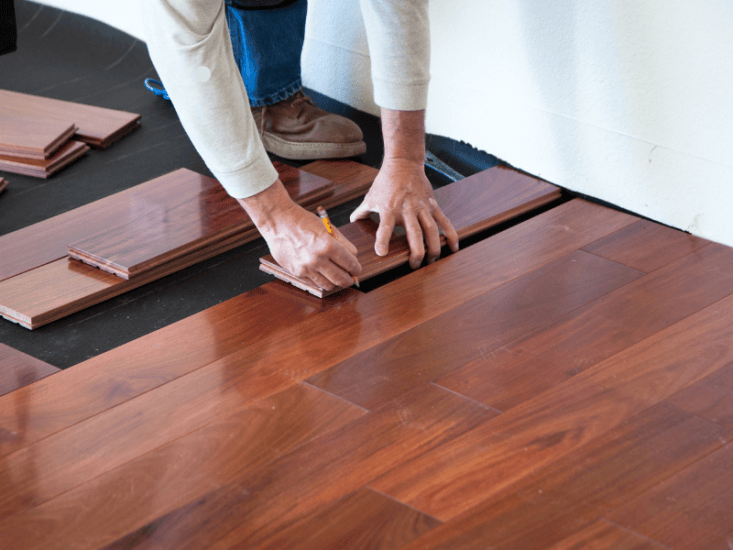
Hardwood floor over concrete slab Florida installs work, but only with the right wood and a plan for moisture. Most Orlando-area homes sit on a slab, so this question comes up all the time. This guide explains which hardwood works, how installers test and protect a slab, and what you should expect to pay.
Can You Install Hardwood Over a Concrete Slab in Florida?
Yes, you can, but engineered hardwood is the usual choice. Its layered core handles moisture better than solid wood. Installers test the slab first, add a moisture barrier, and use a glue-down or floating method. Solid hardwood needs a plywood subfloor, which raises the floor height and adds cost.
| Option | Works on a slab? | How it goes down | Main risk |
|---|---|---|---|
| Engineered hardwood, floating | Yes | Planks float over a barrier and underlayment | Hollow sound or movement on a poorly flattened slab |
| Engineered hardwood, glue-down | Yes | Approved adhesive bonds planks to the slab | Failure if the slab is too damp or dirty |
| Solid hardwood on plywood | Yes, with extra prep | Plywood is fastened to the slab, and boards are nailed to it | Added height and cost, plus moisture trapped under the plywood |
| Solid hardwood, glued direct | Rarely | Only if the manufacturer allows it | Cupping, gaps, and warranty issues |
Method descriptions follow general guidance from Flooring Clarity. Always check the specific product’s instructions, because manufacturers set their own rules.
Why Slabs Are Tricky in Florida
Concrete looks dry, yet it holds water. It can pull moisture up from the soil beneath it, and it can keep doing that for years. Wood reacts to that moisture, so a hardwood floor over a slab needs more care than one over a wood subfloor.
- Slab-on-grade homes are common. Many houses in Orlando, Winter Park, Lake Nona, Windermere, Dr. Phillips, and Winter Garden sit directly on the ground.
- Humidity adds a second source. Moisture can come from the slab below and from the air above.
- Age doesn’t guarantee dryness. One flooring guide warns that concrete can keep wicking moisture, so you can’t rely on the slab’s age alone.
- Storms and leaks matter. A heavy summer rain or a plumbing leak can soak a slab edge.
Because of this, a good installer treats moisture as step one, not an afterthought.
Step 1: Test the Slab for Moisture
Testing tells you whether the slab is dry enough for wood. There are two common tests, and they measure different things.
Calcium Chloride Test
This test measures how much water vapor leaves the slab surface. An installer seals a dish of calcium chloride under a plastic dome and weighs it before and after, usually over 60 to 72 hours. Wood Floor Business reports that the wood flooring industry generally accepts a rate of 3 pounds or less per 1,000 square feet in 24 hours.
Relative Humidity (RH) Probe Test
This test measures the humidity inside the slab. The installer drills a hole, seals it, and inserts a probe. It reads conditions deeper in the concrete instead of only at the surface, so many pros like it. However, the acceptable RH level depends on the flooring maker and the installation method, so check the product’s instructions.
Also, one test isn’t always enough. A sealed or over-troweled surface can make a surface test read low, so installers sometimes use both.
Step 2: Add the Right Moisture Barrier
A moisture barrier slows vapor from the slab. The right type depends on the flooring and the test results.
- Polyethylene sheeting (6-mil): common under floating floors, with seams overlapped by at least 6 inches and the edges run up the walls.
- Liquid-applied membrane: rolled onto the slab, and often used under glue-down floors.
- Manufacturer systems: some flooring brands sell a matching barrier or adhesive, and using it can protect the warranty.
If the slab tests too wet, a barrier alone may not be enough. In that case, installers may recommend a heavier moisture-mitigation product, or they may suggest waiting. Alternatively, they may steer you toward tile or luxury vinyl plank.
Step 3: Prep the Slab
A clean, flat slab makes the difference between a quiet floor and a squeaky or hollow one.
- Flatten it. Flooring Clarity lists a common target of 3/16 inch over 10 feet. Installers grind high spots and fill low spots with self-leveling compound.
- Clean it. Dust, oil, paint, and old adhesive can block a glue bond.
- Check cracks. Slabs crack in Florida, so installers repair any that could telegraph through the floor.
- Acclimate the wood. Many guides suggest letting planks sit in the room for 48 to 72 hours, though your product may require more.
Which Install Method Is Best?
Floating Floor
Planks click together and rest on the barrier and underlayment, with nothing fastened to the slab. This is quick, and it handles small slab imperfections well. On the other hand, it can sound hollow, and it moves a little underfoot in some products.
Glue-Down
The installer spreads an approved adhesive on the slab and sets each plank in it. The floor feels solid and quiet. However, it needs a very clean, flat, dry slab, and it’s harder to repair later.
Plywood Subfloor and Nail-Down
An installer fastens about 3/4-inch plywood to the slab, then nails solid boards to the plywood. It makes a traditional floor, but it raises the height. As a result, you may need to trim doors and adjust transitions. The plywood can also trap moisture if the slab isn’t managed properly.
How Much Does It Cost?
Costs vary by wood, room size, and slab condition. Flooring Clarity estimates engineered hardwood at about $4 to $8 per square foot for materials, a vapor barrier and underlayment at $0.50 to $1.50, professional labor at $3 to $7, and moisture testing and leveling at $0.50 to $2. Those are national numbers, so treat them as a starting point. For Orlando-specific context, see our flooring installation cost guide.
Surprise costs usually come from the slab, not the wood. For example, a badly uneven floor can need a lot of leveling compound, and a wet slab can need a mitigation system. That’s why a testing step before you buy planks saves money.
Mistakes That Ruin Wood Floors on Slabs
- Skipping the moisture test because the slab “feels dry.”
- Laying solid hardwood straight on concrete without a plan.
- Ignoring the manufacturer’s moisture limits and losing the warranty.
- Installing before the house has steady air conditioning, so humidity swings hit new wood.
- Leaving no expansion gap at the walls. Wood needs room to move.
- Buying the cheapest barrier, then covering it with an expensive floor.
Orlando Area Notes
Slab conditions vary across the Orlando area, so avoid assuming your neighbor’s result will match yours. Newer homes in Lake Nona, Windermere, and Dr. Phillips are often built on slabs, while older homes in Winter Park may include a mix of foundation types. Therefore, the first job is to confirm what’s under your current floor.
Also, think about where moisture shows up. Rooms near a sliding door, a garage wall, or an exterior wall often see more moisture than the middle of the house. Test those spots, not just the easy ones. If one corner reads high, the installer can treat that area or adjust the plan before any planks go down.
What to Ask Your Installer
- Which moisture test will you run, and can I see the results?
- What moisture barrier or adhesive will you use, and does the flooring maker approve it?
- How will you flatten the slab, and what does that add to the quote?
- How much expansion gap will you leave at the walls?
- Does the manufacturer’s warranty cover installation over a slab in Florida?
- What happens if the test comes back too high?
A good installer answers these without hesitation. In contrast, vague answers are a warning sign.
Care After Installation
The work doesn’t end when the last plank goes down. Keep the air conditioning running steadily, because big humidity swings stress any wood floor. Wipe spills quickly, and use a barely damp mop instead of a wet one. Finally, watch for early warning signs, such as cupping edges, a musty smell, or gaps that open and close with the seasons. If you see them, call your installer early, before small problems become big ones.
When to Choose Something Other Than Hardwood
Sometimes the smart answer is a different floor. If a slab tests very wet, if the room floods, or if you want a bathroom or laundry floor, tile or luxury vinyl plank is safer. You can read more about hardwood flooring installation in Orlando to see whether wood fits your home.
Get a Second Opinion on Your Slab
A short visit can answer most of these questions. Limas No Limits offers free in-home estimates in Orlando, Winter Park, Lake Nona, Windermere, Dr. Phillips, and Winter Garden. The team is licensed and insured, and financing is available. See our flooring installation in Orlando page, then get a free estimate so you know what your slab needs before you buy a single plank.
Frequently Asked Questions
Can you put hardwood flooring directly on concrete?
Engineered hardwood can go directly over concrete when it’s glued down or floated over a moisture barrier. Solid hardwood usually needs a plywood subfloor first.
Is engineered hardwood good over a concrete slab?
Yes. Its layered core is more stable than solid wood, so it’s the usual choice for slabs. It still needs a moisture test and a barrier.
How do you test a concrete slab for moisture before installing wood?
Installers use a calcium chloride test, an in-slab relative humidity probe, or both. The wood industry generally accepts 3 pounds or less on the calcium chloride test, according to Wood Floor Business.
Do you need a vapor barrier under hardwood on concrete?
In most cases, yes. Options include 6-mil polyethylene sheeting, a liquid membrane, or a manufacturer system. Follow your flooring maker’s instructions.
What is the best way to install hardwood over a slab?
Floating and glue-down are the common methods for engineered planks. The best choice depends on your slab, the product, and the room.
How much does it cost to install hardwood over concrete?
National estimates run about $4 to $8 per square foot for engineered hardwood materials, plus $3 to $7 for labor. Testing, barriers, and leveling add to that. Get a local quote for exact numbers.


