

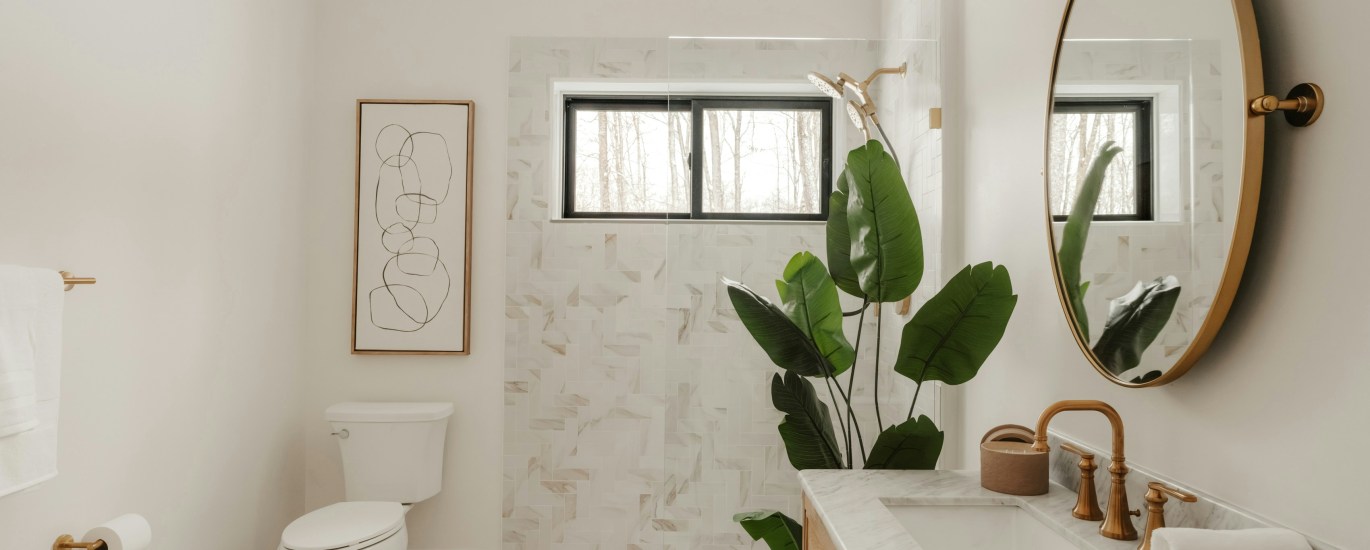
If you’re searching for bathroom design Orlando ideas, here’s the catch: a bathroom that looks perfect in photos can fall apart in Florida humidity. The good news is that you don’t have to pick between style and durability. This guide walks through the layout, shower, tile, vanity, color, and lighting ideas that work in Orlando homes, and it flags what to skip.
What Makes Bathroom Design in Orlando Different?
The short answer: pair a timeless, neutral palette with materials that handle moisture. That means porcelain tile, a properly waterproofed shower, a wood or plywood vanity, and an exhaust fan that vents outdoors. Then add warmth with wood tones, layered lighting, and matte or brushed fixtures.
Why so much focus on moisture? Orlando is hot and wet for much of the year, and a bathroom adds steam on top of that. One local cabinet retailer cites Florida State University climate data that puts Orlando’s average morning relative humidity near 88 percent. The EPA recommends keeping indoor humidity between 30 and 50 percent to discourage mold. Your air conditioner helps, but your bathroom design has to do its share.
Your home’s age matters too. Older homes, such as many in Winter Park, can hide outdated plumbing or moisture damage behind the walls, so your design budget may need room for repairs. Newer builds, such as many in Lake Nona, usually let you spend more on finishes. Either way, plan the design and the waterproofing together, not one after the other.
Start With Layout and Style
Keep the Footprint or Move Things?
Keeping your toilet, sink, and shower in the same spots is the easiest way to control cost and timeline. Moving drains means opening the floor, and it can also trigger permits. On the other hand, a new layout can fix a daily annoyance, like a door that hits the vanity or a shower that’s too tight to use comfortably.
- Keep the layout if: the room works, and you mainly want a fresh look.
- Change the layout if: the room fights you every morning, or you want a larger shower.
A simple test helps. If the new layout solves a real problem, the extra spend usually pays off. If it’s only a nice-to-have, keep the footprint and put the money into finishes.
Pick a Style That Ages Well
Trends come and go, so choose a base that lasts. The National Kitchen & Bath Association’s 2026 Bath Trends report surveyed nearly 700 industry professionals. Transitional or timeless style led at 70 percent, followed by organic or natural style at 65 percent and contemporary or minimalist style at 57 percent. In other words, designers keep leaning toward calm, classic rooms.
That’s good news for Florida homeowners, because a transitional or natural look pairs well with light tile, warm wood tones, and simple fixtures, and you can refresh it later with towels, art, and hardware instead of a full remodel.
Shower Design Ideas for Orlando Homes
The shower is the star of most bathroom remodels, and it’s also where Florida moisture does the most damage. So design it for looks and for water.
- Walk-in shower. A low or no-threshold entry feels open and works for every age. In the NKBA survey, 55 percent of respondents said a larger shower matters more than a bathtub.
- Frameless glass. It keeps sight lines clean and has no metal channels to trap water. Glass in a shower must be safety (tempered) glass.
- Built-in niche and bench. A tiled niche replaces the clutter of shelves, and a bench adds comfort and safety.
- Handheld sprayer. It makes cleaning and bathing easier.
Here’s the part that photos hide. Most shower failures come from missing or incomplete waterproofing behind the tile, not from the tile itself. Cement backer board resists water, but it isn’t waterproof. A sealed waterproofing membrane behind the tile, with sealed seams and corners, is the detail that protects your walls. Ask any contractor exactly how they waterproof a shower before you compare prices.

Tile and Grout Ideas That Handle Florida Humidity
Porcelain tile is the safest choice for Florida bathrooms. It absorbs very little water, with the industry standard calling for 0.5 percent or less of its weight. It also comes in stone looks, concrete looks, and wood looks, so you can get the style without the moisture risk of real wood.

Large-Format Tile: Pros and Cons
Big tiles, such as 12-by-24 inches and larger, are popular for good reason. In the NKBA survey, 89 percent of respondents said clients want smaller or no grout lines, and 80 percent expect large-format tile to be popular.
- Pros: fewer grout lines, a cleaner look, and easier wiping.
- Cons: the surface underneath must be flat, installation takes skill, and cutting around corners and drains takes more planning.
Add Pattern in Small Doses
Patterned and textured tile is gaining ground, with 66 percent of NKBA respondents noting its rise. In a humid climate, use it as an accent. A patterned floor or a single feature wall adds personality without overwhelming a small room.

Choose Grout With Care
Standard cement grout is porous and can stain or grow mold. Epoxy grout is non-porous and doesn’t need sealing, so it holds up better in showers. It costs more and takes more skill to install, so ask your installer which grout they use and why.
Vanity, Counter, and Storage Ideas
Your vanity takes daily splashes, so material matters as much as style. Wood-faced vanities now beat painted ones in the NKBA survey, at 62 percent versus 53 percent. They also bring warmth to a bathroom that’s mostly tile.
| Instead of this | Choose this | Why it holds up in Florida |
|---|---|---|
| Particleboard or MDF vanity | Plywood or solid wood vanity | Particleboard swells when moisture reaches unsealed edges. |
| Marble or granite counter | Engineered quartz | Quartz is non-porous and needs no regular sealing. |
| Paper-faced drywall in the shower | Cement board plus a waterproof membrane | Paper-faced board breaks down when it gets wet. |
| Framed shower door | Frameless glass | There are no metal channels to trap water. |
| Real wood or standard laminate floor | Wood-look porcelain tile | Porcelain won’t buckle when water reaches the seams. |
Think about storage early, too. For example, built-in spots for hair tools, makeup, and medications keep counters clear, and a floating vanity lets air move underneath. Drawers with dividers beat open cabinets for small items.
Color, Lighting, and Fixture Ideas
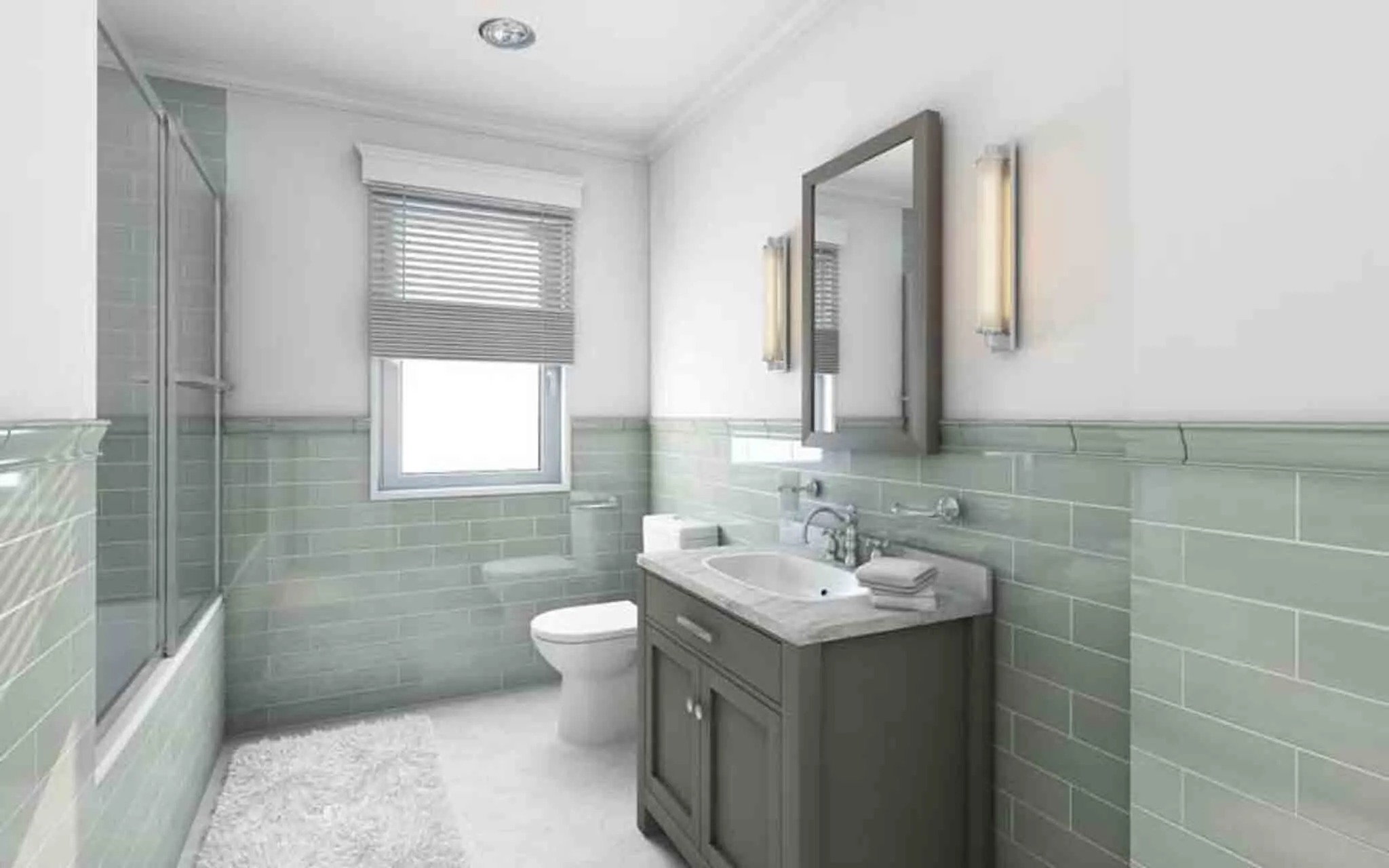
For color, neutrals rule bathrooms right now. In the NKBA survey, 96 percent of respondents named neutrals as the dominant color family. Off-white, light tan, and white led, and sage green topped the green options at 64 percent.
- Palette: warm white or greige walls, with a sage or soft blue accent.
- Wood tone: a natural wood vanity or open shelf for warmth.
- Fixtures: matte or brushed finishes beat polished ones in the survey (54 and 51 percent versus 39 percent), and they hide water spots better.
- Lighting: layer ceiling light, vanity light at face level, and a dimmable accent light. Lighting quality ranked as a top consideration for 91 percent of respondents.
- Mirrors: go big and simple. A large mirror bounces light and makes a small room feel wider.
The Design Detail Nobody Photographs: Ventilation
A beautiful bathroom without good ventilation turns into a mold problem. Rely on a fan, not a window, because windows stay shut while the AC runs.
- Size the fan for your room’s square footage.
- Vent it to the outdoors, never into the attic.
- Choose a model with a humidity sensor or a timer.
- Run it 15 to 20 minutes after every shower.
Steam that lingers on surfaces gives mold a chance to start within a day or two, so this small upgrade protects everything else you just paid for.
Bathroom Design Ideas by Room Type
Small Bathrooms and Powder Rooms
So go light and simple. Use large tile to reduce visual clutter, a floating vanity, a frameless glass panel, and one bold detail, like a patterned floor. For more ways to stretch your space, see our guide to a small bathroom remodel in Orlando.
Guest and Hall Bathrooms
These rooms get less use, so you can spend less on features and more on a standout detail. A statement mirror, a textured accent wall, or a bold light fixture does the job without a big budget.
Primary Bathrooms
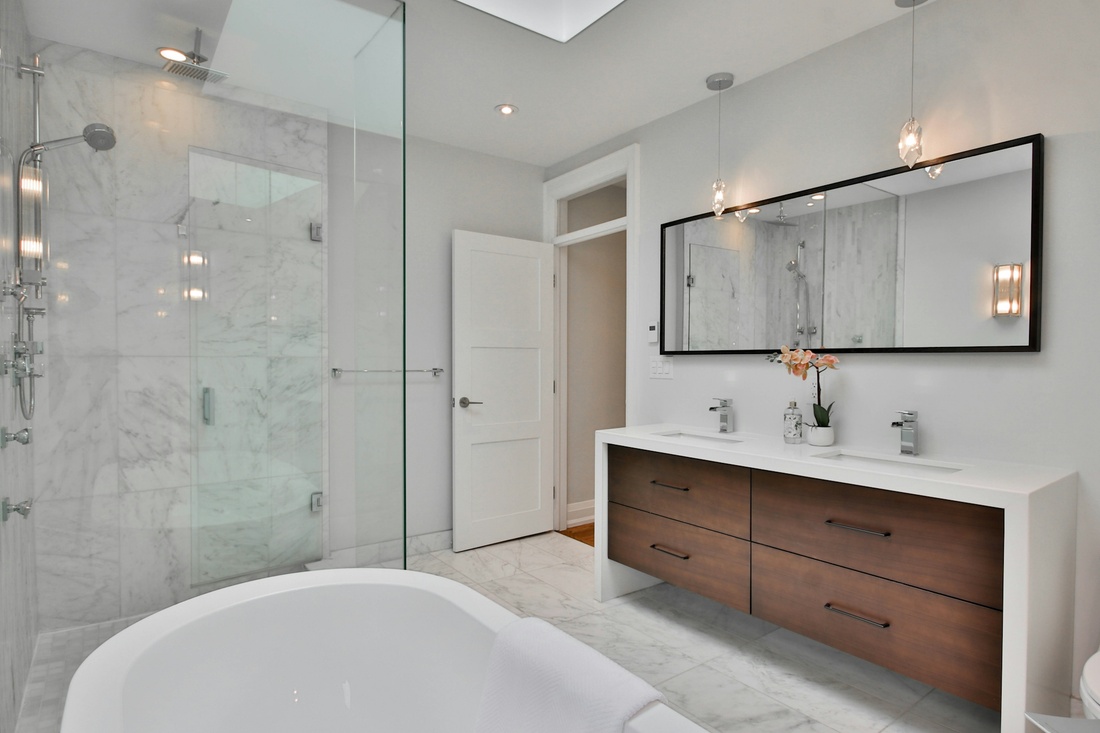
Because you have more room, add spa-style upgrades: a larger walk-in shower, a double vanity, a built-in bench, and warmer lighting. If your primary bath is next, read about master bathroom remodeling in Orlando.
What Does Bathroom Design Cost in Orlando?
Still, design choices drive price more than most people expect. Large slabs, natural stone, detailed mosaics, and moved plumbing all raise the total. A bathroom remodel with Limas No Limits usually runs about $4,000 to $25,000, depending on size and scope, and a free estimate gives your exact number.
To stretch your budget, keep the layout, choose porcelain over natural stone, and spend on the parts you can’t see, like waterproofing and ventilation. Those also protect your investment for years. Financing is available if you’d rather not downgrade materials you’ll use every day.
From Ideas to a Real Plan
- Save five to ten photos you love, then look for what they share.
- Decide what’s worth keeping in your current bathroom.
- Check each material on your list against Florida humidity.
- Set a budget range and keep a cushion for surprises behind the walls.
- Walk through the room with a licensed, insured contractor and ask how they handle waterproofing and ventilation.
Ready to turn ideas into a plan? Limas No Limits is a licensed, insured team that does its own plumbing and demolition, and it serves Orlando, Winter Park, and Lake Nona. See our bathroom remodeling services in Orlando, call (407) 398-4817, or get a free estimate online.
Frequently Asked Questions
What is the best bathroom style for Florida homes?
Transitional and natural styles work best because they pair well with light tile, wood tones, and simple fixtures. They also age better than trend-heavy looks, so you won’t feel pressure to redo the room in a few years.
What is the best tile for a bathroom in Orlando?
Porcelain is the safest pick. It absorbs very little water, resists stains, and comes in stone, concrete, and wood looks. Pair it with epoxy grout in the shower for the best moisture protection.
What bathroom materials hold up to Florida humidity?
Porcelain tile, engineered quartz, plywood or solid wood vanities, frameless glass, and a waterproof membrane behind shower tile all hold up well. Particleboard vanities and paper-faced drywall tend to fail.
Do I need an exhaust fan in my bathroom?
Yes, because a fan that vents outdoors removes the steam that feeds mold. Choose one sized for your room, and run it for 15 to 20 minutes after each shower.
How do I make a small bathroom look bigger?
Use light colors, large tile, a floating vanity, a frameless glass panel, and one large mirror. Good lighting helps too, because a bright room always feels larger.
How much does a bathroom remodel cost in Orlando?
With Limas No Limits, a bathroom remodel usually runs about $4,000 to $25,000. Size, tile choices, plumbing changes, and hidden repairs decide where yours lands, and a free estimate gives the exact number.


