Glass tile vs porcelain tile is one of the first choices you’ll face in a bathroom remodel, and ceramic usually joins the debate. Each one looks different, costs different, and behaves differently when water hits it. This guide compares all three, shows where each belongs in your bathroom, and covers the Florida details that decide whether your tile lasts.
Glass Tile vs Porcelain Tile: The Short Answer
Use porcelain for bathroom floors and shower floors. It’s dense, hard, and low in water absorption. Use glass on walls, backsplashes, and accents, where its shine pays off and slipping isn’t a concern. Use ceramic for budget-friendly walls. Many bathrooms combine two or three of them.
| Factor | Porcelain | Ceramic | Glass |
|---|---|---|---|
| Best for | Floors, shower floors, shower walls | Walls, niches, vanity backsplashes | Accent walls, backsplashes, niches |
| Water absorption | Very low (0.5% or less) | Higher than porcelain | Non-porous |
| Slip resistance on floors | Good, with a matte or textured finish | Varies by tile and finish | Poor when wet, so avoid on floors |
| Durability | Very durable | Durable on walls, less so on floors | Can chip or crack under impact |
| Installed cost per sq ft | $12 to $40 | $7 to $45 | $15 to $35 |
| Upkeep | Easy | Easy | Easy, but shows water spots |
| Look | Stone, concrete, and wood looks | Classic, many colors | Bright and reflective |
Cost figures come from HomeServe’s 2025 tile guide. They include materials and labor, and they vary a lot by size, pattern, and prep work.
Porcelain Tile: The Workhorse
Porcelain is fired at a higher temperature than ceramic, so it comes out denser. The industry treats tile that absorbs 0.5 percent or less of its weight in water as porcelain. That low absorption is why it holds up so well in wet rooms.
Porcelain Pros
- Very low water absorption, so it resists stains and moisture damage.
- Hard and scratch resistant, so it handles daily foot traffic.
- Available in stone, concrete, and wood looks, so you get the style without the moisture risk of real wood.
- Works on floors, shower floors, and walls.
Porcelain Cons
- It costs more than basic ceramic, especially in large formats.
- It’s harder to cut, so installers need the right tools, and labor can run higher.
- Large tiles need a very flat surface underneath.
For floors that get wet, check the tile’s slip rating. Look for a wet coefficient of friction (DCOF) of at least 0.42, which is the common benchmark for wet interior floors. A matte or textured finish and small mosaics usually grip better than glossy tile.
Glass Tile: The Showpiece
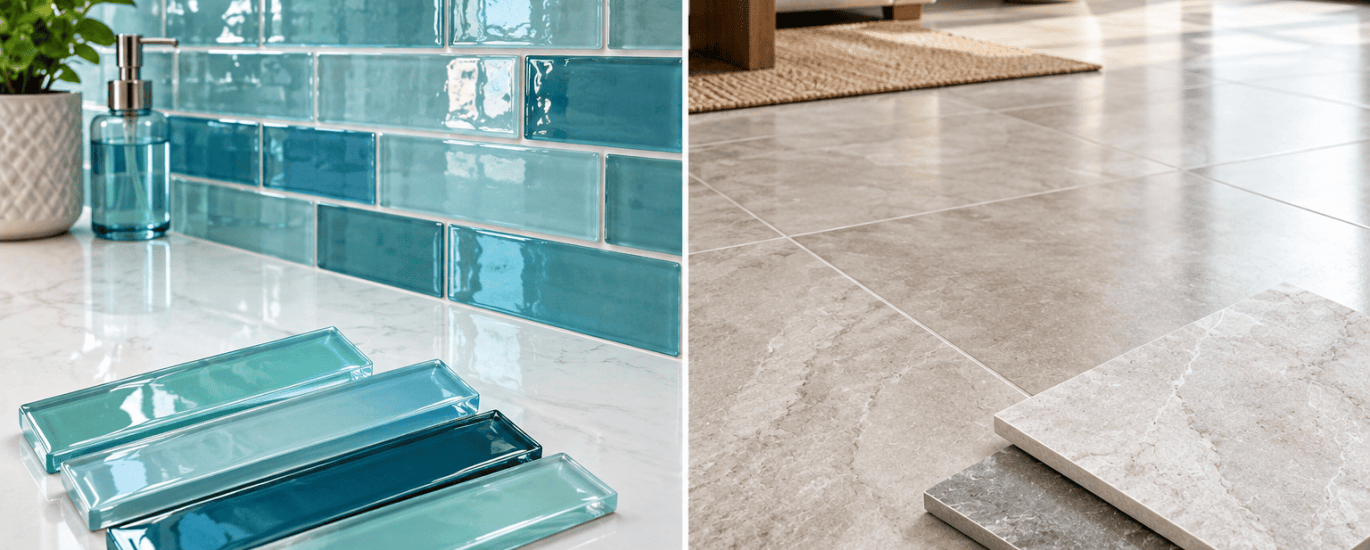
Glass tile reflects light, so it makes a small bathroom feel brighter. It’s non-porous, so water doesn’t soak in, and it resists stains and mildew when it’s installed correctly. You’ll see it most on backsplashes, accent walls, and shower niches.
Glass Pros
- A bright, reflective look that adds depth.
- Non-porous, so it’s easy to wipe clean.
- Great for small accents that make the room feel custom.
Glass Cons
- It generally costs more than ceramic or porcelain to buy, and it takes skill to install.
- Glass needs the right adhesive and technique. Mistakes can let adhesive show through the tile.
- It’s more fragile than porcelain, so heavy impacts or rough handling can chip or crack it.
- It can be slippery when wet, so it’s a poor choice for floors.
- It shows water spots, so you’ll wipe it down more often.
A common smart move is to use glass as an accent, not the whole room. A strip of glass in a shower niche, or a glass backsplash behind the vanity, gives you the look without paying glass prices for every square foot.
Ceramic Tile: The Budget-Friendly Classic
Ceramic is fired at a lower temperature, so it’s softer and absorbs more water than porcelain. Sources give different absorption ranges, but all agree it’s higher. Even so, glazed ceramic works well on walls when it’s sealed and installed properly.
- Pros: a lower material cost, a wide range of colors, and easy cutting around outlets and plumbing.
- Cons: it’s less durable on floors, it chips more easily, and it carries more moisture risk in a shower than porcelain.
How Much Do They Cost?
Installed prices overlap more than you’d think. HomeServe lists ceramic at $7 to $45 per square foot, porcelain at $12 to $40, and glass at $15 to $35. Materials alone tell a different story. Angi’s guide puts porcelain materials at about $2 to $15 per square foot, glazed ceramic at $4 to $15, and glass at $10 to $180.
So why do the installed ranges look so close? Labor changes the math. Glass and large porcelain both take extra care, while simple ceramic goes in faster. In other words, the cheapest tile on the shelf isn’t always the cheapest tile on the wall.
Florida Factors: Humidity, Slabs, and Grout
Orlando’s climate puts every tile to the test. Here’s what matters most.
- Humidity. It’s constant, so choose tile and grout that resist moisture and mildew. Porcelain and glass both do well, and sealing cement-based grout or using epoxy grout helps a lot.
- Concrete slabs. Many Central Florida homes sit on a slab, and slabs can wick moisture up from the ground. Porcelain’s low absorption helps. Slabs can also crack, so installers may add a crack isolation membrane under floor tile.
- Waterproofing. This matters more than the tile you pick. Grout lines let some moisture through, so a waterproof membrane behind shower tile protects the walls. Ask how any installer handles it.
Ceramic vs Porcelain: What Actually Differs?
People often treat these two as twins, but they behave differently. Porcelain uses finer clay and a hotter kiln, so it ends up harder and denser. Ceramic uses a coarser clay body with a glaze on top, so a chip can show the lighter body underneath. Because porcelain is denser, everyday wear tends to show less.
- Moisture: porcelain absorbs 0.5 percent or less, while ceramic absorbs more. That gap matters most in showers and on floors.
- Strength: porcelain handles dropped bottles and heavy traffic better. Ceramic suits walls, where impact is rare.
- Price: ceramic is often cheaper to buy, but premium ceramic can match entry-level porcelain.
- Slip rating: neither type is safe or unsafe on its own. The finish and the DCOF rating decide it, so always check the box.
Which Tile Goes Where in Your Bathroom?
- Bathroom floor: porcelain, in a matte or textured finish.
- Shower floor: porcelain mosaics, because small tiles and extra grout lines give more grip.
- Shower walls: porcelain or ceramic, with glass as an accent band.
- Shower niche: glass or ceramic for a bright accent.
- Vanity wall or backsplash: glass, ceramic, or porcelain, depending on your style. For ideas, see our backsplash installation in Orlando page.
- Tub surround: porcelain or ceramic.
When you mix materials, keep the undertones consistent. A cool gray porcelain floor next to a warm cream glass accent can clash, so bring samples into your bathroom light before you decide.
Care and Cleaning
All three types are easy to live with, as long as the grout is handled well. Grout, not the tile, is the part that stains first.
- Wipe shower walls after use, or run a squeegee over glass tile to prevent water spots.
- Use a pH-neutral cleaner. Harsh acids can dull grout and some glazes.
- Reseal cement-based grout once a year or as the manufacturer advises.
- Run the bathroom fan during and after showers, because Florida humidity feeds mildew.
In short, glass asks for the most wiping, porcelain asks for the least, and ceramic sits in the middle.
Design Ideas That Mix Tile Types
Pairing materials is where bathrooms start to look custom. These combinations work well and stay practical.
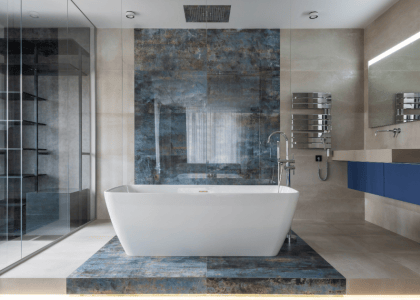
- Stone-look porcelain floor with a glass accent band: the floor stays grippy, and the band catches the light.
- Ceramic subway tile on shower walls with a porcelain mosaic floor: a classic look at a friendly price.
- Large-format porcelain on all surfaces with a glass niche: clean lines with one bright detail.
- Wood-look porcelain floor with white ceramic walls: warm and calm, without wood’s water risk.
Also, think about grout color. A tight, matching grout line makes large tile look like one clean surface, while a contrasting line highlights a pattern.
Common Mistakes to Avoid
- Choosing glossy tile for a wet floor because it looks great in the showroom.
- Using glass on every surface and then finding the budget stretched thin.
- Skipping the waterproofing membrane to save a little money upfront.
- Ordering the exact square footage, with no extra for cuts and breakage. Most installers suggest 10 percent extra, and more for diagonal patterns.
- Picking tile before checking that the subfloor is flat and dry.
Questions to Ask Your Installer
- Which tile do you recommend for each surface, and why?
- What slip rating does the floor tile have?
- How will you waterproof the shower?
- What adhesive and grout will you use for glass tile?
- Does the quote include removal, prep, and extra tile for cuts?
At Limas No Limits, tile projects start with a free in-home estimate. The team installs porcelain, ceramic, and glass tile, and it checks the surface and prep before the first tile goes down. See our tile installation in Orlando and bathroom flooring installation pages, call (407) 398-4817, or get a free estimate online. The team is licensed and insured, and financing is available.
Frequently Asked Questions
Is glass tile good for bathroom floors?
Usually not. Glass can be slippery when wet, and it’s more fragile than porcelain. Choose porcelain for floors, and keep glass for walls, backsplashes, and accents.
Is porcelain or ceramic tile better for a bathroom?
Porcelain is better for floors and shower floors because it absorbs less water and wears better. Ceramic works well on walls and niches, and it usually costs less.
Is glass tile more expensive than porcelain?
Often yes, especially for materials, though installed prices overlap. HomeServe lists glass at $15 to $35 per square foot installed and porcelain at $12 to $40. Glass costs more to buy, and it takes extra skill to install.
Is glass tile hard to install?
It takes more care than ceramic or porcelain. Installers use the right adhesive and technique so it doesn’t show through the glass, and they handle it carefully to avoid chips.
Does glass tile get moldy?
Glass itself resists mold and mildew, because it’s non-porous. The grout between tiles can still stain or grow mildew, so seal cement grout or use epoxy grout.
What is the best tile for a shower?
Porcelain is a strong choice for shower floors and walls, with glass as an accent. Whatever you pick, the waterproofing behind the tile matters most.
{ “@context”: “https://schema.org”, “@type”: “FAQPage”, “mainEntity”: [ { “@type”: “Question”, “name”: “Is glass tile good for bathroom floors?”, “acceptedAnswer”: { “@type”: “Answer”, “text”: “Usually not. Glass can be slippery when wet, and it’s more fragile than porcelain. Choose porcelain for floors, and keep glass for walls, backsplashes, and accents.” } }, { “@type”: “Question”, “name”: “Is porcelain or ceramic tile better for a bathroom?”, “acceptedAnswer”: { “@type”: “Answer”, “text”: “Porcelain is better for floors and shower floors because it absorbs less water and wears better. Ceramic works well on walls and niches, and it usually costs less.” } }, { “@type”: “Question”, “name”: “Is glass tile more expensive than porcelain?”, “acceptedAnswer”: { “@type”: “Answer”, “text”: “Often yes, especially for materials, though installed prices overlap. HomeServe lists glass at $15 to $35 per square foot installed and porcelain at $12 to $40. Glass costs more to buy, and it takes extra skill to install.” } }, { “@type”: “Question”, “name”: “Is glass tile hard to install?”, “acceptedAnswer”: { “@type”: “Answer”, “text”: “It takes more care than ceramic or porcelain. Installers use the right adhesive and technique so it doesn’t show through the glass, and they handle it carefully to avoid chips.” } }, { “@type”: “Question”, “name”: “Does glass tile get moldy?”, “acceptedAnswer”: { “@type”: “Answer”, “text”: “Glass itself resists mold and mildew, because it’s non-porous. The grout between tiles can still stain or grow mildew, so seal cement grout or use epoxy grout.” } }, { “@type”: “Question”, “name”: “What is the best tile for a shower?”, “acceptedAnswer”: { “@type”: “Answer”, “text”: “Porcelain is a strong choice for shower floors and walls, with glass as an accent. Whatever you pick, the waterproofing behind the tile matters most.” } } ] }